
Big Beautiful Bill Implications
December 19, 2025
Big Beautiful Bill - Potential Impacts
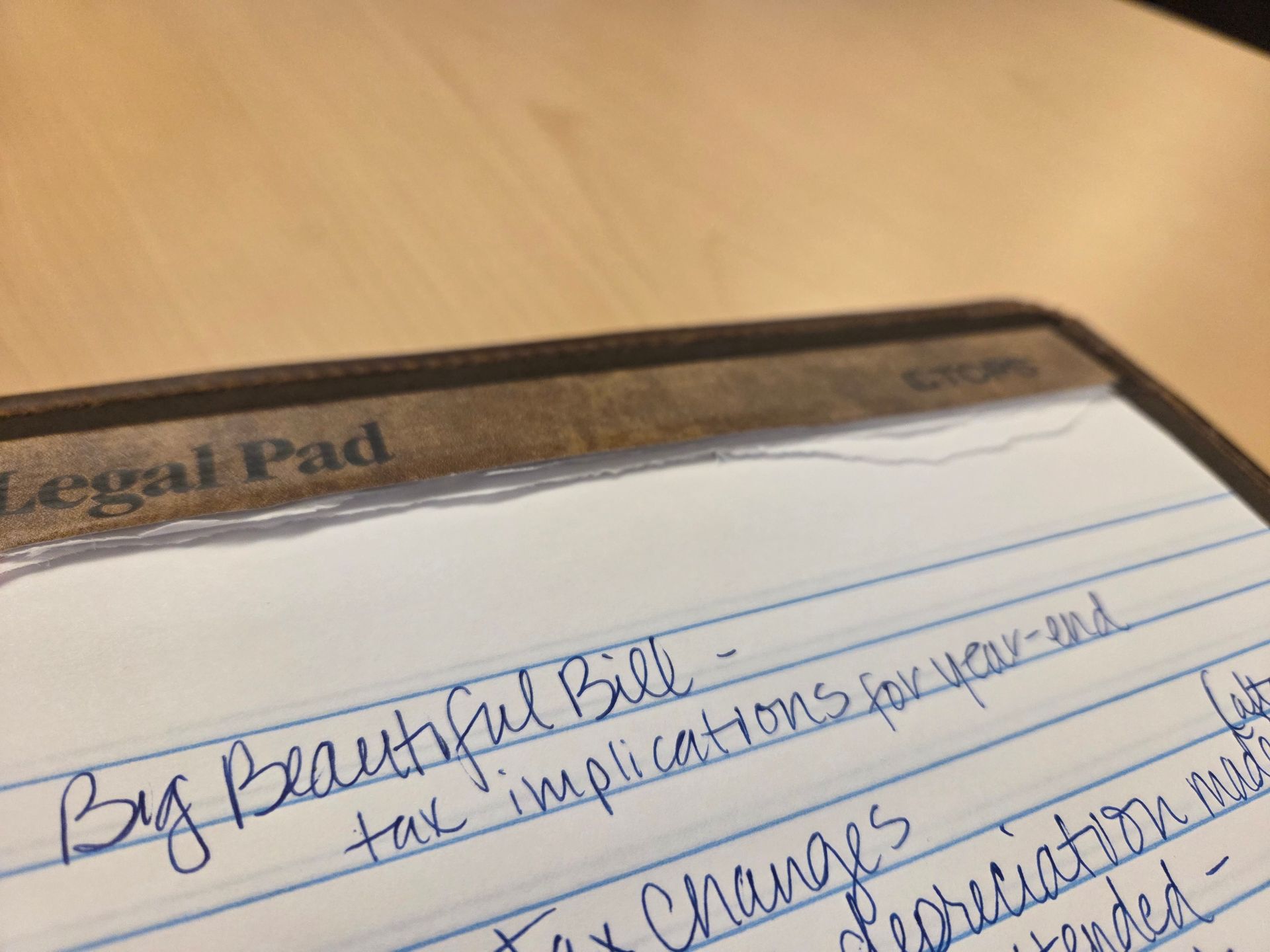
Katie attended a Redmond Chamber of Commerce Lunch & Learn highlighting relevant changes from the One, Big, Beautiful Bill Act that will impact businesses and individuals in 2025 and 2026. Thank you to Capstone Accounting and Tax for the presentation. Interpretation and policy coming from the bill is still being formulated by the IRS and other organizations. W2 forms also have not been updated to reflect new rules, but that should not affect most of our readers. Here are some implications:
For businesses:
- 100% bonus depreciation on capital purchases has been made permanent. This was set to be down to 40% for 2025, but that number will only apply to purchases made after January 19, 2025. Making this selection could be beneficial if there is a large asset that you need to purchase, but there may be other ways to offset tax liability that would be more effective. Please speak with your planner or a CPA about your options.
- New limits have been added to the ability to file retention credit claims from 2021. This was a credit that could have been filed for businesses that kept employees working during COVID.
- Rural areas have been defined as Qualified Opportunity Zones. States will need to further define these areas. Substantial improvement moved from 100 percent to 50 percent. This is an incentive for commercial investors to build in depressed areas. It can have significant tax implications for serious investors.
- Small businesses using point of sale devices or electronic payment processing such as Venmo, will now only be required to report amounts over $20,000 and 200 transactions. This has been raised from a threshold of $600!
- There are allowances for claiming interest on the purchase of passenger vehicles, both personally and in business. These are highly limited to new vehicles with particular specifications. Please research thoroughly before deciding to jump on a brand new car loan before the end of the year.
For Individuals:
- There is now no tax on tips, or on the half-time portion of time-and-a half wages paid for overtime. This will be strictly monitored for businesses that normally receive tips and pay via overtime so that pay is not adjusted due to a loophole.
- There will be an extra $6,000 each added to the standard deduction for seniors – over 65. This is not limited to taxpayers who are not itemizing, but there is a fairly low phase-out, as there is for many of these tax-breaks.
- The State and Local Tax deduction limit has been raised from $10,000 to $40,000. There is a phaseout here as well, but it is significantly higher.
- The Child Tax Credit is now $2,200, and the phase-out starts at $200,000 of taxable income – single, and $400,000 – married filing jointly.
- Finally, for now, there is a new charitable deduction in 2026 of $1,000 per taxpayer, even if not itemizing.
If you have questions or would like a year-end chat, please call the office to schedule or click on any of our pictures to find a time on our calendars!

CFS Team Attends Bend Chamber Impact Conference

Cascade Financial Strategies Sponsoring the Go Clean Energy Conference